Local SEO vs GEO for Tri-Cities Businesses | 2026
Local Search · GEO · Tri-Cities

Local SEO vs GEO: What Tri-Cities Businesses Need From Each

Local SEO and Generative Engine Optimization solve different visibility problems. Local SEO helps a nearby customer find, evaluate and contact a business through conventional local search experiences. GEO focuses on making useful business information easier for generative search systems to understand and reference when answering questions.

For service businesses in Coquitlam, Port Coquitlam and Port Moody, the practical question is not which approach should replace the other. It is where each approach belongs in the customer journey.

Updated September 2026 • Tri-Cities, BC • Local SEO + GEO Comparison
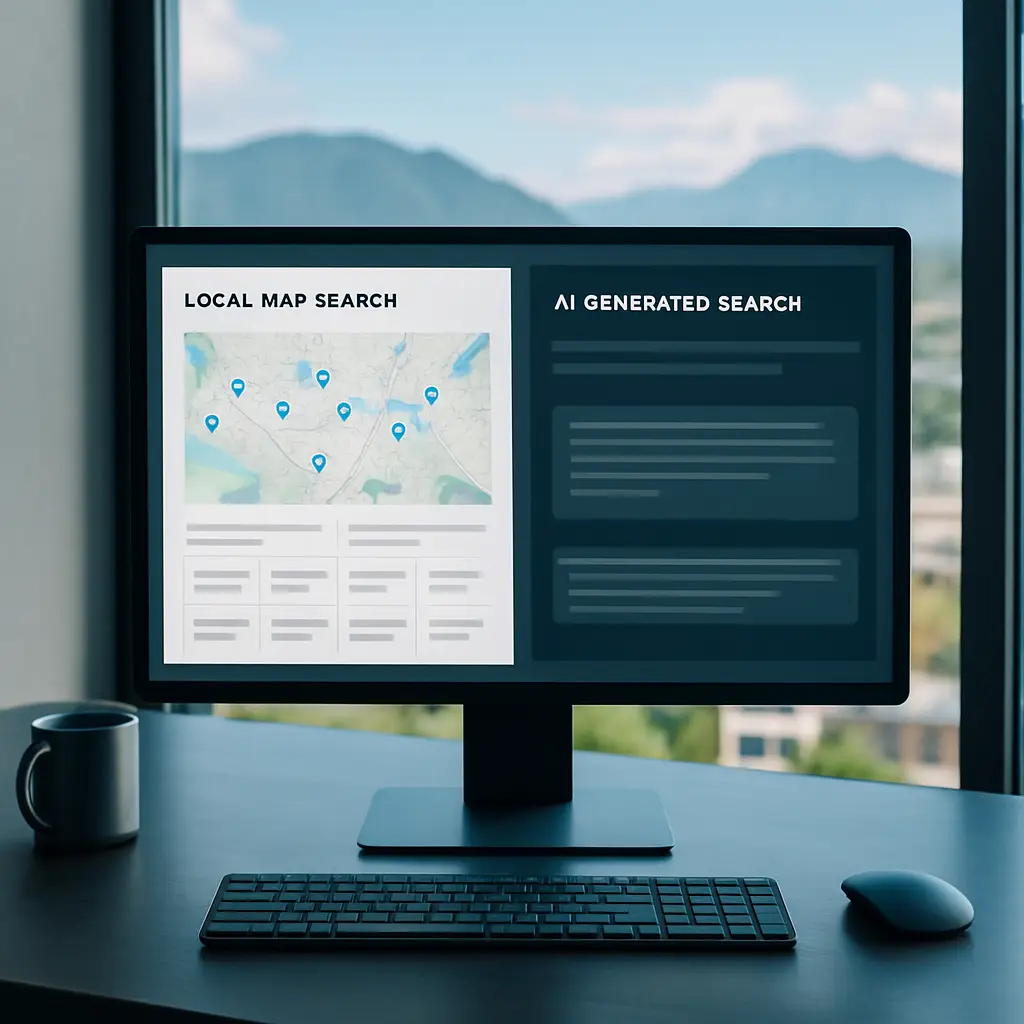
Local SEO versus GEO comparison for Tri-Cities service businesses
Two Visibility Layers Nearby discovery and generative-answer discovery require overlapping but different signals.
Quick Answer

What Is the Difference Between Local SEO and GEO for a Local Business?

Local SEO focuses on helping a business appear when people search for nearby services, locations and providers. It includes signals connected with the website, local landing pages, Google Business Profile information, reviews and geographic relevance.

GEO, or Generative Engine Optimization, focuses on making useful information clear, well-supported and understandable enough to participate in generative search experiences. This can include direct answers, strong entity information, first-party expertise and verifiable supporting detail.

A Tri-Cities service business normally needs both. Local SEO supports nearby discovery and commercial intent, while GEO can strengthen visibility during research and answer-led searches.

Different Jobs, Connected Strategy

Local SEO and GEO Should Not Compete for the Same Job

The clearest way to separate the two is to look at what the customer is trying to accomplish when the search happens.

Local SEO

Help Nearby Customers Find and Choose the Business

Local SEO is strongest when the search has an immediate geographic or commercial component.

  • Service + city searches
  • “Near me” searches
  • Map and local-business discovery
  • Directions, calls and business information
  • Local service comparison
  • Location-specific landing pages
Main question: “Which local business can provide this service?”
GEO

Help Search Systems Understand and Use Your Expertise

GEO becomes more important when the search is informational, comparative or answer-led.

  • Complex service questions
  • Cost-factor explanations
  • Option comparisons
  • Decision criteria
  • Process questions
  • Generative-answer research
Main question: “What information helps answer this decision?”
At-a-Glance Comparison

Local SEO vs GEO for Local Businesses

There is significant overlap, but the primary visibility target and content emphasis are different.

Area Local SEO GEO
Primary objective Help people discover a relevant local business and move toward contacting it. Make useful business information understandable and suitable for answer-led discovery.
Typical search “Plumber Coquitlam” or “physiotherapist near me.” “What should I compare before replacing a furnace?” or another detailed research question.
Important assets Service pages, location pages, Google Business Profile, reviews and consistent local business information. Detailed service content, direct answers, first-party experience, comparisons, FAQs and proof.
Geographic emphasis Strong. Location is often part of the commercial intent. Relevant when geography changes the answer or establishes genuine local experience.
Conversion role Often close to the call, form, direction request or appointment. Often earlier in the research journey, although it can influence commercial decisions.
Main content risk Thin city pages or duplicated location copy. Repetitive AI-targeted articles that answer essentially the same question.
Local Discovery

What Local SEO Needs to Accomplish

When someone is looking for a service provider nearby, they usually need practical information quickly: what the business does, whether it serves their area, whether it appears credible and how to make contact.

This is where local SEO remains essential. GEO does not replace location relevance, business profile accuracy, strong service pages or a straightforward conversion path.

✓
Clear service ownership
Each core service should have a clear page rather than several URLs competing for the same commercial query.
✓
Accurate geographic information
Explain where the business genuinely serves customers.
✓
Consistent business data
Important website and business-profile information should tell the same story.
✓
Trust before conversion
Reviews, service details, experience and proof should help visitors evaluate the business before contacting it.

Businesses working specifically in Port Coquitlam can also reinforce appropriate geographic relevance through the existing Port Coquitlam page.

Comparison of local map visibility and AI search visibility for Tri-Cities businesses
Generative Discovery

What GEO Needs to Accomplish

GEO is most useful when a potential customer is researching a problem rather than simply searching for a nearby provider. The content needs enough clarity and substance to help resolve the question.

For a service business, that can mean explaining what affects cost, how two service options differ, what warning signs matter, what happens during a consultation or what factors should influence a customer's decision.

Direct Answers Without Thin Content

Put the concise answer near the relevant heading, then support it with context, limitations, examples and practical next steps. AEO-friendly structure should improve readability, not turn every page into a list of isolated snippets.

First-Party Experience

Practical experience gives the content something more useful than a summary of information already available everywhere. Processes, project observations, original examples and case-specific lessons can help establish that depth.

Verifiable Business Context

Important claims should connect with evidence. Relevant case studies, clear company information and accurate service descriptions support both users and broader trust signals.

Local SEO and GEO overlap framework for service businesses
Where the Two Strategies Meet

Six Foundations Support Both Local SEO and GEO

The tactics are not identical, but several fundamentals support visibility across both conventional local search and answer-led discovery.

1

Clear Page Intent

Each important URL should have a distinct purpose so search systems and customers can understand what it owns.

2

Accurate Entity Information

Business identity, services and geographic coverage should remain clear and consistent.

3

First-Party Evidence

Real project information, methods, experience and proof provide more value than generic promotional claims.

4

Useful Internal Links

Informational pages should connect naturally with commercial services, locations and proof.

5

Accessible Content

Important information should be crawlable, readable and structured with clear headings.

6

E-E-A-T Signals

Genuine experience, expertise, accountability and trust should be visible rather than implied.

Hyperlocal Reality

How This Changes Across the Tri-Cities

Coquitlam, Port Coquitlam and Port Moody form a connected service market, but local relevance still needs to reflect where and how a business actually operates.

Coquitlam

Use Local Context Where It Changes the Answer

References to areas such as City Centre, Austin Heights, Maillardville, Burquitlam or Burke Mountain can add useful context when they reflect actual service coverage, customer needs or business experience.

Port Coquitlam

Connect Geography With the Existing Location Page

Where commercial location intent exists, support the existing Port Coquitlam page rather than publishing several articles targeting the same city-service relationship.

Port Moody

Use Genuine Service-Area Context

Mention Port Moody when the business genuinely serves customers there and the geography is useful to the answer. Avoid manufacturing city relevance merely to broaden keyword coverage.

Coquitlam Port Coquitlam Port Moody Tri-Cities
Search Intent

Which Strategy Matters More for Different Queries?

Local SEO and GEO often support the same customer, but at different moments in the decision process.

Primarily Local SEO

“Accountant near me”

The customer is primarily trying to find a nearby provider. Local relevance, business information, reviews and commercial landing pages matter most.

Primarily Local SEO

“Physiotherapist Coquitlam”

Geography is central to the query. The business needs clear local service relevance and a usable path from search to appointment.

Primarily GEO / AEO

“What should I ask before hiring a contractor?”

This is an answer-led research query. Useful criteria, practical experience and well-structured guidance become more important.

GEO + Local SEO

“What does furnace replacement cost in Coquitlam?”

The query combines an informational decision with local context. Helpful cost factors and local service relevance both contribute.

GEO + Local SEO

“Which type of dental implant is appropriate?”

The answer requires useful expertise first, but a local clinic can benefit when strong educational content connects naturally with its service offering.

Commercial Follow-Up

“Book a consultation”

At this stage, neither additional GEO copy nor another article is the priority. The user needs a clear conversion path.

Cannibalization Control

Do Not Build Separate Local SEO and GEO Versions of Every Service Page

One of the easiest ways to create unnecessary overlap is to treat GEO as a reason to duplicate an existing service page.

If an SEO service page already owns commercial intent, improve that page with clearer answers, stronger proof and better entity information. Do not create a second “GEO optimized” version targeting essentially the same customer.

The same principle applies to local SEO services. The commercial page should continue to own the service query. Informational articles should support it by answering distinct questions.

Keep the content roles separate.

Service pages own commercial intent. Location pages own genuine geographic service intent. Blog articles answer distinct informational questions. GEO should improve the quality of those assets rather than multiplying them.

E-E-A-T

Trust Matters in Both Discovery Paths

A local customer and an answer-generating system both benefit from information that is specific, attributable and supported by real experience.

E

Experience

Show what the business actually encounters and how services are performed in practice.

E

Expertise

Explain why recommendations differ by situation instead of presenting generic advice as universal.

A

Authority

Build a coherent body of useful content and support claims with relevant case studies.

T

Trust

Use accurate business information, clear authorship and claims that visitors can reasonably verify.

✓

Local Proof

Use genuine local examples where geography is relevant instead of relying on repeated city names.

↗

Clear Next Step

Helpful information should eventually connect users with the appropriate service or contact path.

Measurement

Measure Local SEO and GEO Differently

One reporting dashboard can support both strategies, but the signals you review should reflect the job each channel is supposed to perform.

Local SEO Measurement

  • Local organic visibility
  • Location and service-page traffic
  • Google Business Profile interactions
  • Calls and form submissions
  • Local landing-page conversions
  • Performance across target service areas

GEO Measurement

  • Visibility for answer-led queries
  • Performance of educational landing pages
  • Brand and entity discovery trends
  • Engagement after informational search visits
  • Assisted conversions from educational content
  • Growth in qualified non-brand discovery
The final business metric is still the same. Visibility matters when it helps the right people discover, understand and eventually contact the business. Do not optimize reporting around AI mentions or map positions while ignoring qualified enquiries.
Frequently Asked Questions

Local SEO vs GEO FAQ

Does GEO replace local SEO for a service business?

No. GEO and local SEO address different visibility needs. Local SEO remains important for geographic and high-intent searches, while GEO can strengthen how a business is understood during answer-led research.

Which should a new Tri-Cities business prioritize first?

A business should normally establish its core website, service pages, local information and conversion paths first. GEO improvements can then strengthen those existing assets and the informational content surrounding them.

Is Google Business Profile part of GEO?

Google Business Profile is primarily a local-search asset, but accurate business information also contributes to a clearer overall business entity. It should therefore remain consistent with the website.

Should I create separate GEO landing pages?

Usually not simply because GEO exists. Create a new page when it serves genuinely distinct search intent. If an existing service or informational page already owns the topic, improving that page is generally cleaner than producing an overlapping version.

How does AEO fit between local SEO and GEO?

Answer Engine Optimization focuses on making questions and answers clear and useful. That structure can support both traditional search and generative discovery, so AEO often acts as a practical content layer within a broader SEO and GEO strategy.

Can one page support both local SEO and GEO?

Yes. A strong service page can maintain clear commercial and local intent while also including concise answers, transparent processes, relevant proof and useful supporting information. The important point is to preserve one clear primary purpose for the page.

Local Search + GEO + AEO

Build the Right Visibility Layer for Each Stage of the Search Journey

Tri-Cities businesses do not need to choose between local SEO and GEO. They need clear page ownership, credible local signals, useful answers and a conversion path that connects research with the right service.

Learn how we helped 100 top brands gain success